RapidPassives
RFIC passive design in the browser. Layout generation with real-time preview.
RapidPassives is a browser-based layout generator and viewer for RFIC passive components. Configure geometry, preview in real time with GPU-accelerated 2D and 3D rendering, and export production-ready GDS-II directly from the browser. Everything runs client-side: no upload, no account, no data leaving the machine.
Client-side is a hard requirement: an RFIC layout on a real process stack is not something a designer uploads to someone else's server. It also means the generators and the viewer are the same code whether they run on rapidpassives.org, inside the RapidFEM notebook UI, or embedded in someone else's page.
Generators and viewer
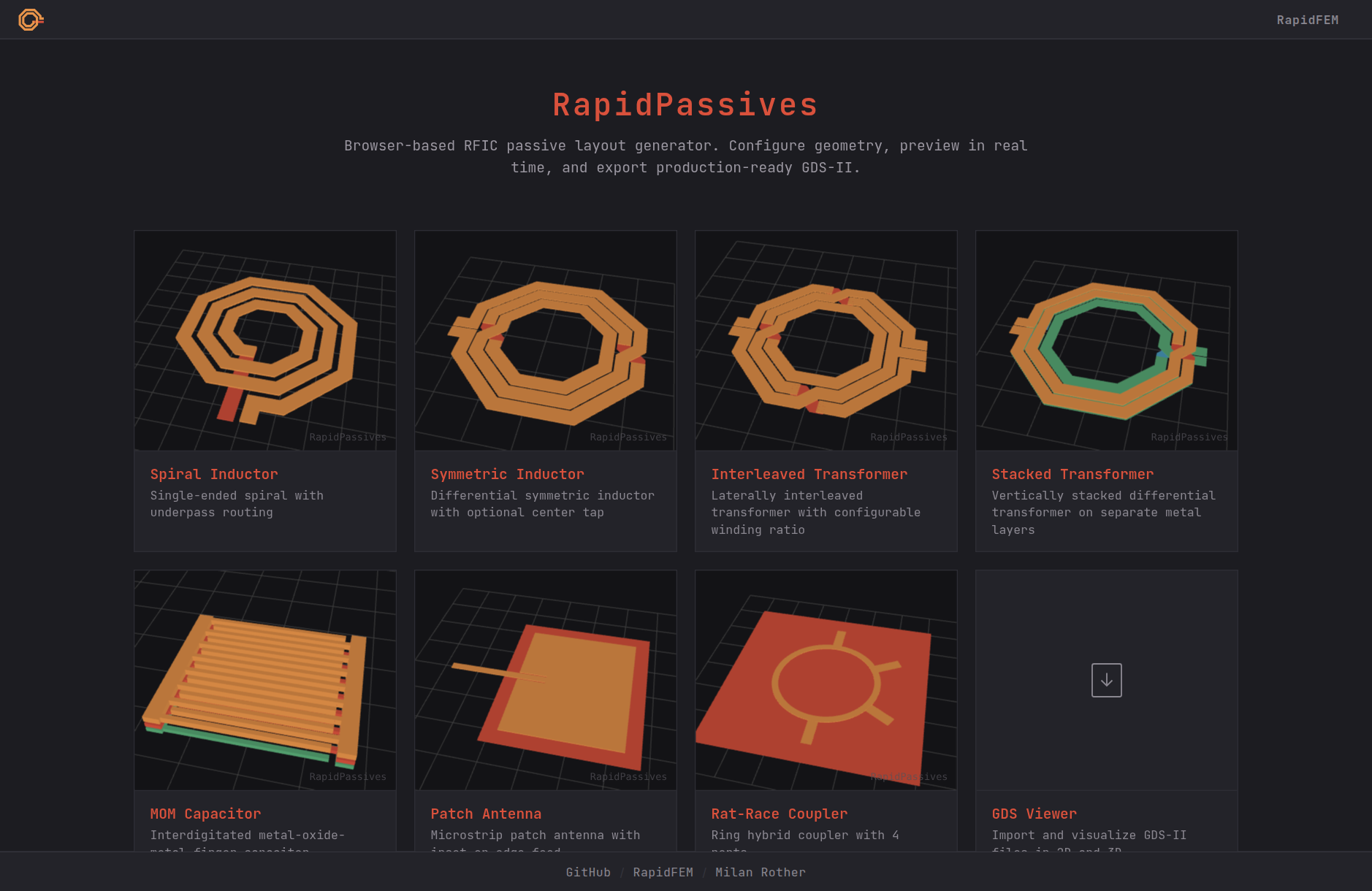
Geometry generators cover spiral and symmetric inductors, interleaved and stacked transformers, MOM capacitors, patch antennas, and rat-race couplers, with aspect ratio control that preserves corner geometry. Antennas and couplers auto-design from frequency: input GHz and substrate, get computed dimensions. The GDS-II viewer imports files by drag-and-drop, parses them in a Web Worker, and holds 60 fps on million-polygon files in the instanced-WebGL renderer. Five PDK presets are unified across generators, viewer, and embed: SKY130, SG13G2, GF180MCU, ASAP7, FreePDK45.
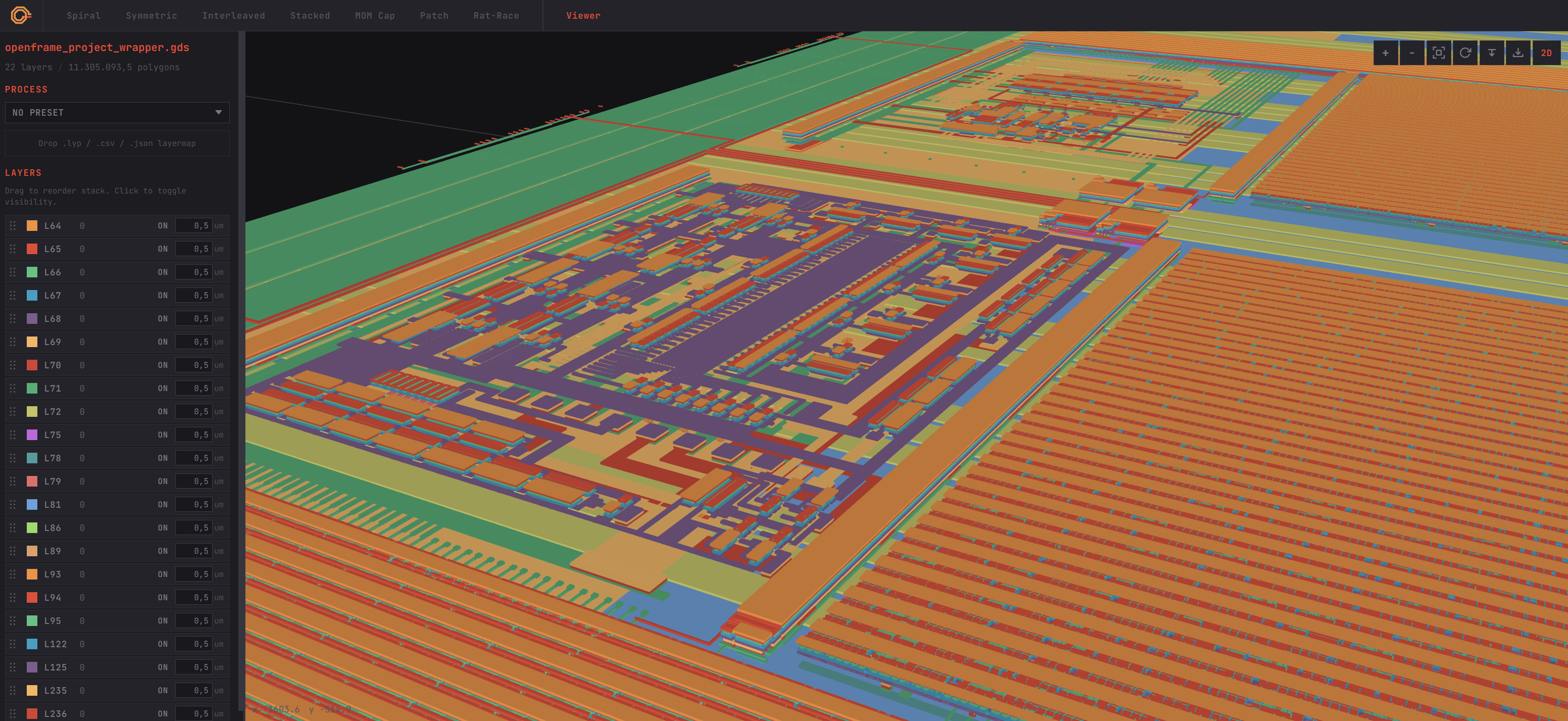
The largest layout put through it so far is Kai Harris' openframe CPU: a 230 MB GDS-II file, 22 layers, 11.3 million polygons.
Embeddable viewer
The 3D GDS viewer ships as a web component, one script tag on any website:
<script src="https://rapidpassives.org/embed/gds-viewer.js"></script>
<gds-viewer src="layout.gds" rotate explode></gds-viewer>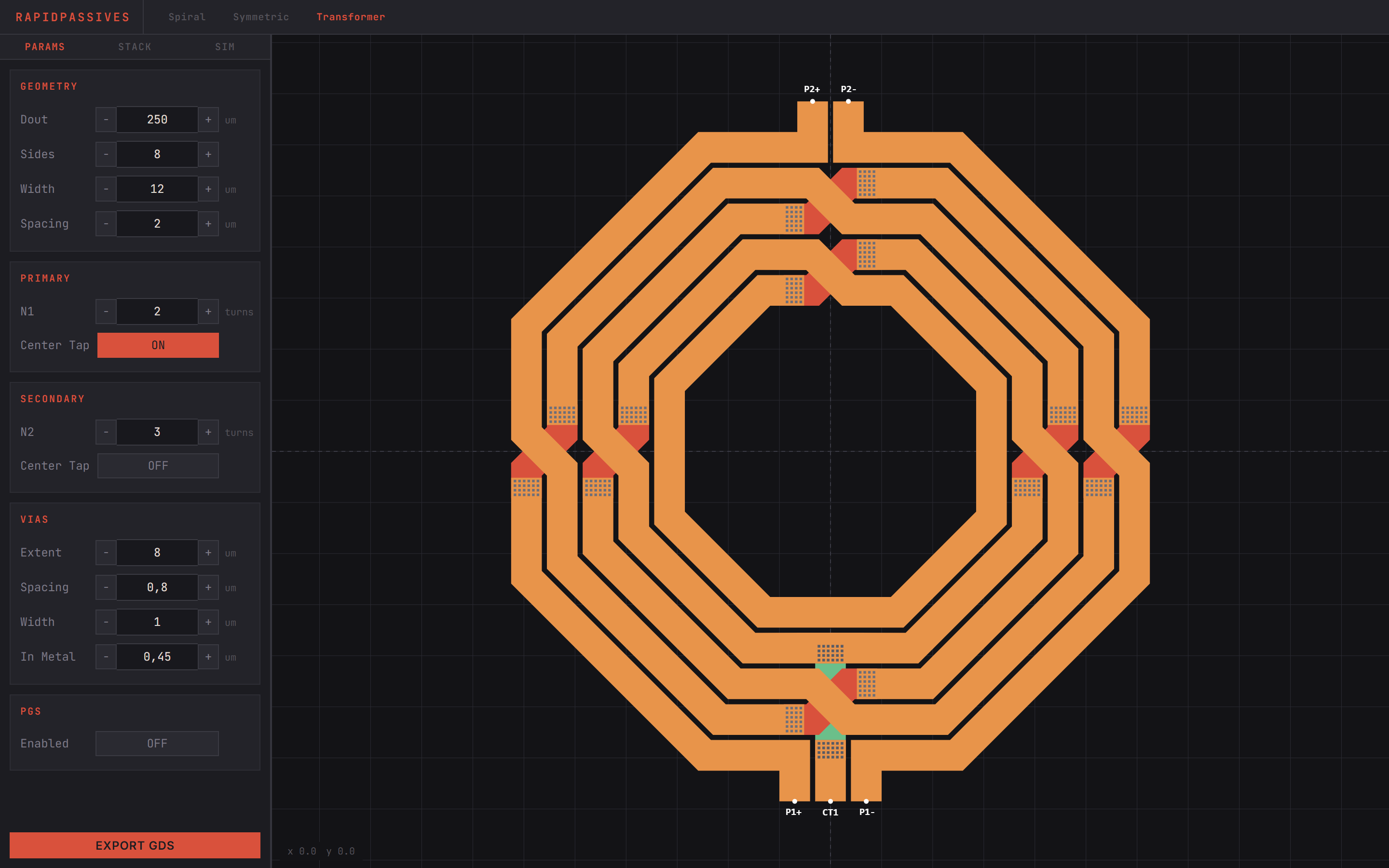
Layer colors, z-positions, and thickness are configurable per GDS layer; the tiles on this site use exactly this component: the rotating transformer on the front page is a live gds-viewer instance.
History
RapidPassives grew out of my master's thesis on area optimized modelling of passive magnetic structures for chip-level integration. Two things from it are still in the tool: the polygonal winding parametrization, which turns a spiral inductor into a handful of geometric numbers instead of a drawing, and the reduction of a full process layerstack to the layers an EM solver needs, which is what makes the parameter sweeps behind a compact model affordable.
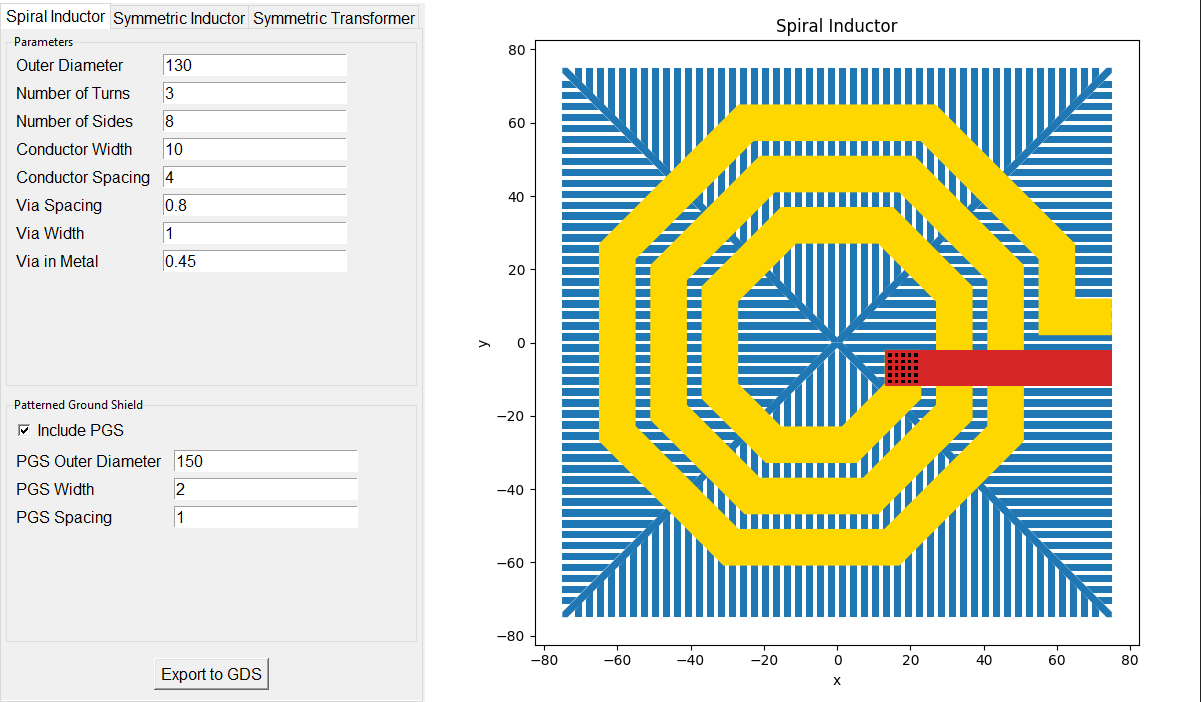
It started as a small Python package with a tkinter GUI, was rebuilt into the fully client-side browser tool it is today, and became the seed of the whole fields level of the stack. The current integration runs through RapidFEM : GDS layouts and process stacks load into the solver as 3D geometry via rapidfem.rfic, and the viewer here became the renderer in its notebook UI.