RSDAG
Rust Symbolic Directed Acyclic Graph. The expression graph compiler under the solvers.
RSDAG traces ODE and DAE systems into an op-level expression graph, optimizes it like a compiler and emits machine code, or runs the same program as an interpreted tape. The idea is the one of CasADi and JAX, narrower on purpose: a backend for simulators.
From expression to tape
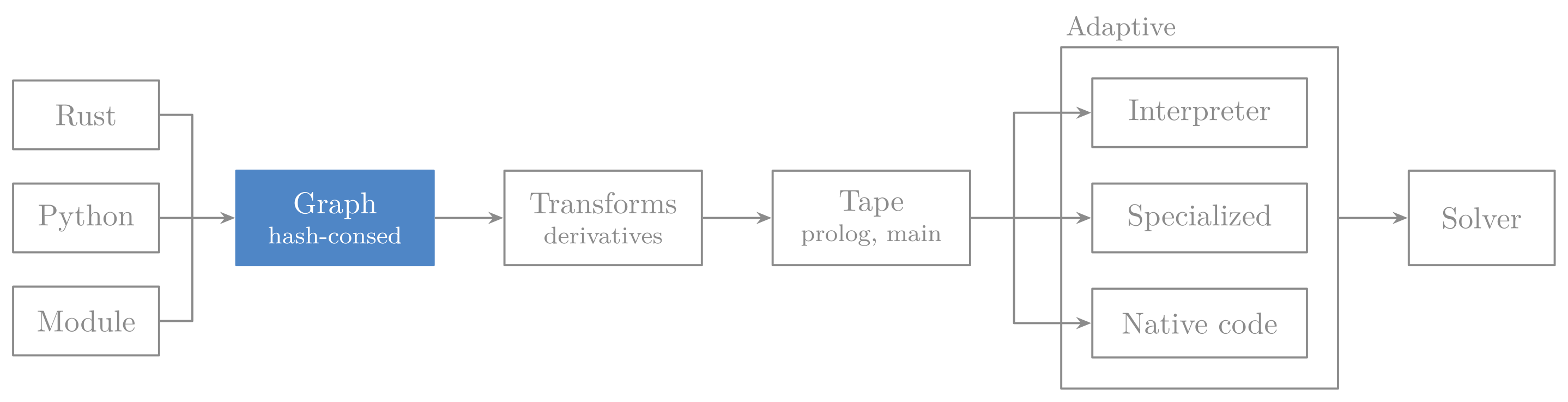
Nodes are hash-consed, so a residual and its Jacobian share their common subexpressions, and constants fold while the graph is built. Differentiation writes into the same graph. The tape compiler schedules for register pressure, turns row dots into matrix kernels, and batches the calls of one model body over all its instances; a body that calls others compiles once, as a template.
Prolog and main
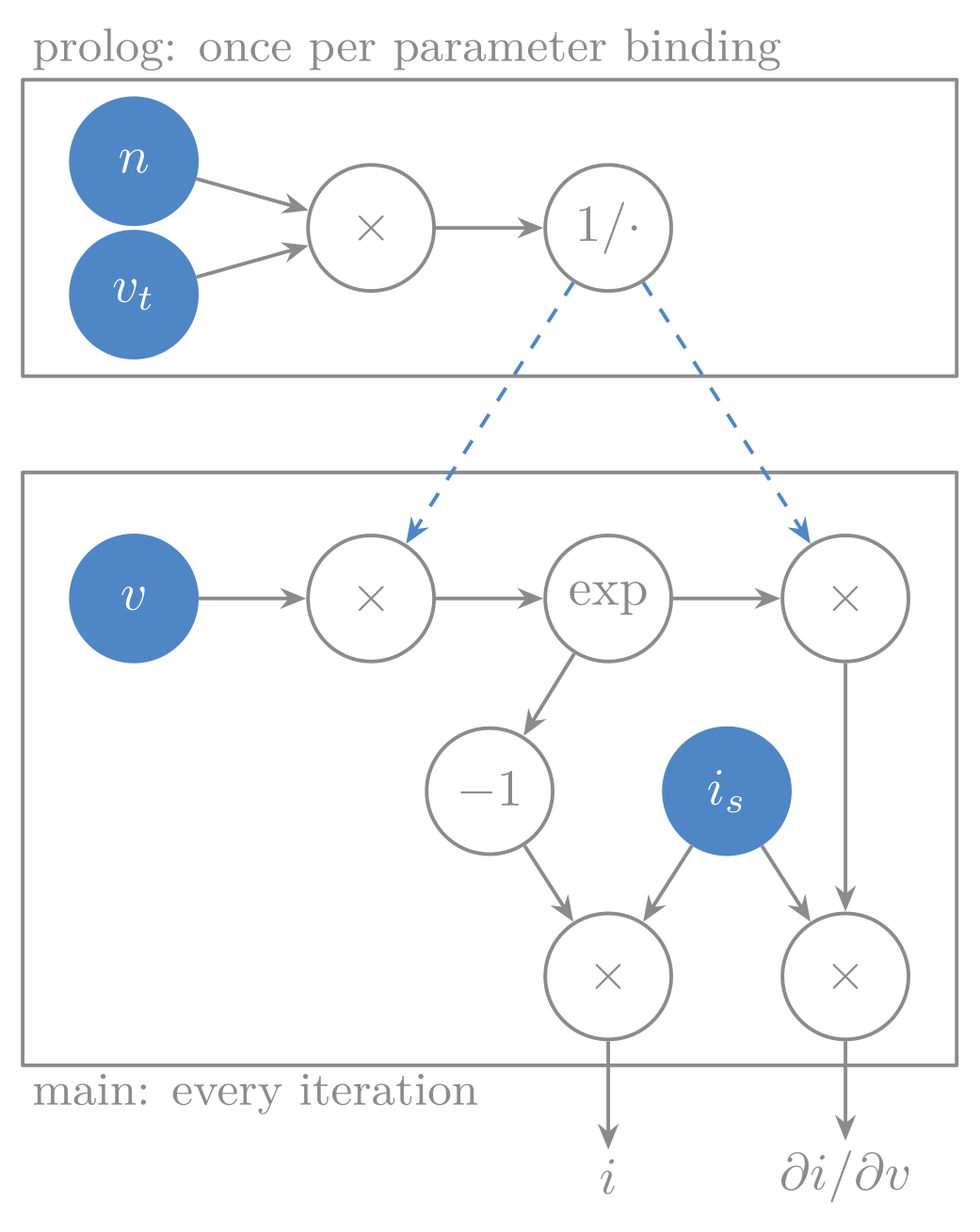
Whatever depends on parameters alone becomes a prolog that runs once per binding, and the main phase runs per iteration. In the diode here, 1/(n vt) is the prolog. Selects specialize the same way: a tape records the arms taken and drops the branches, with guards that hand back to the full tape when the region changes.
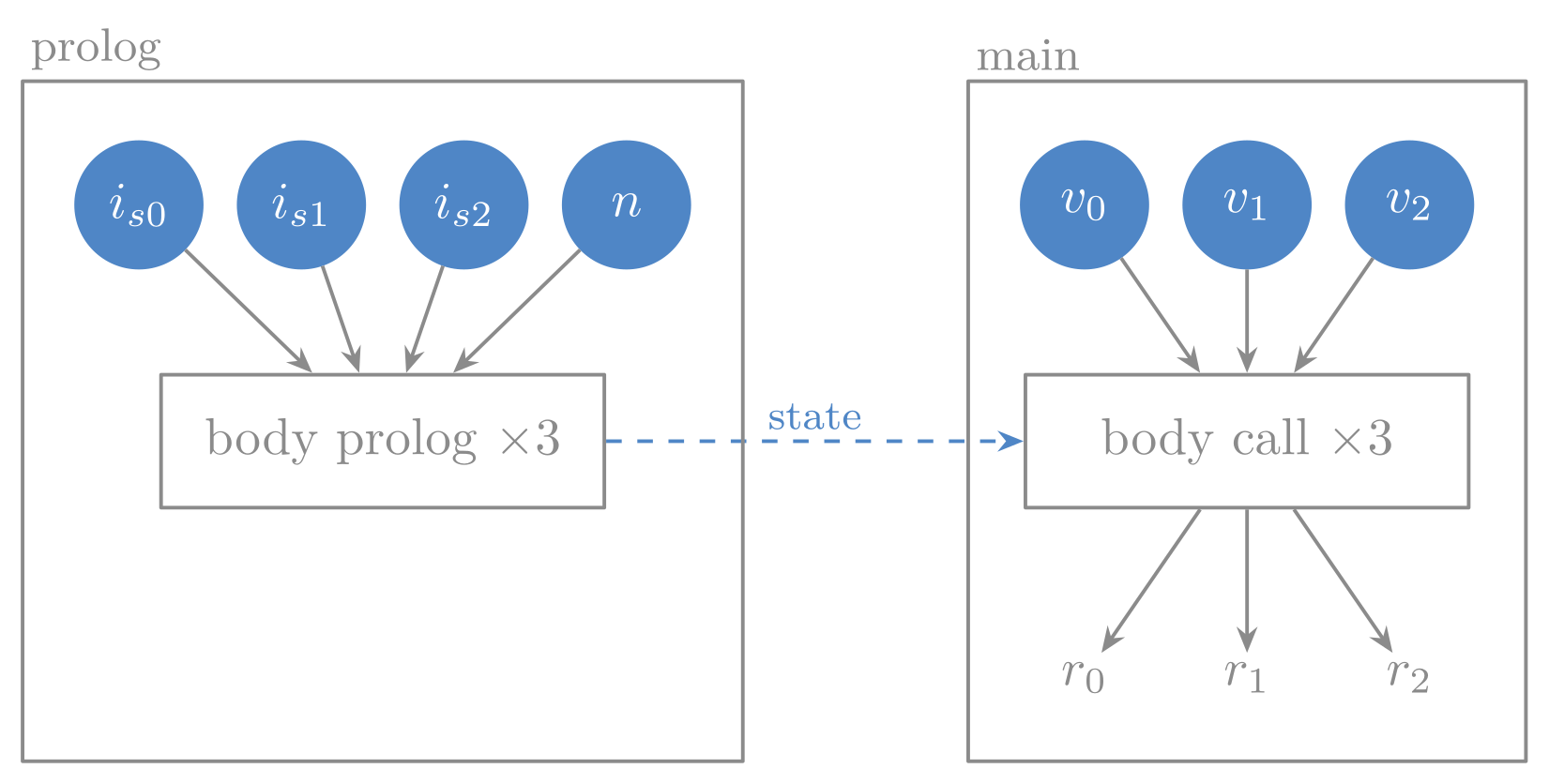
A model body called from many instances splits the same way: its prolog runs once per instance, its main phase as one batched call over all of them.
Native code
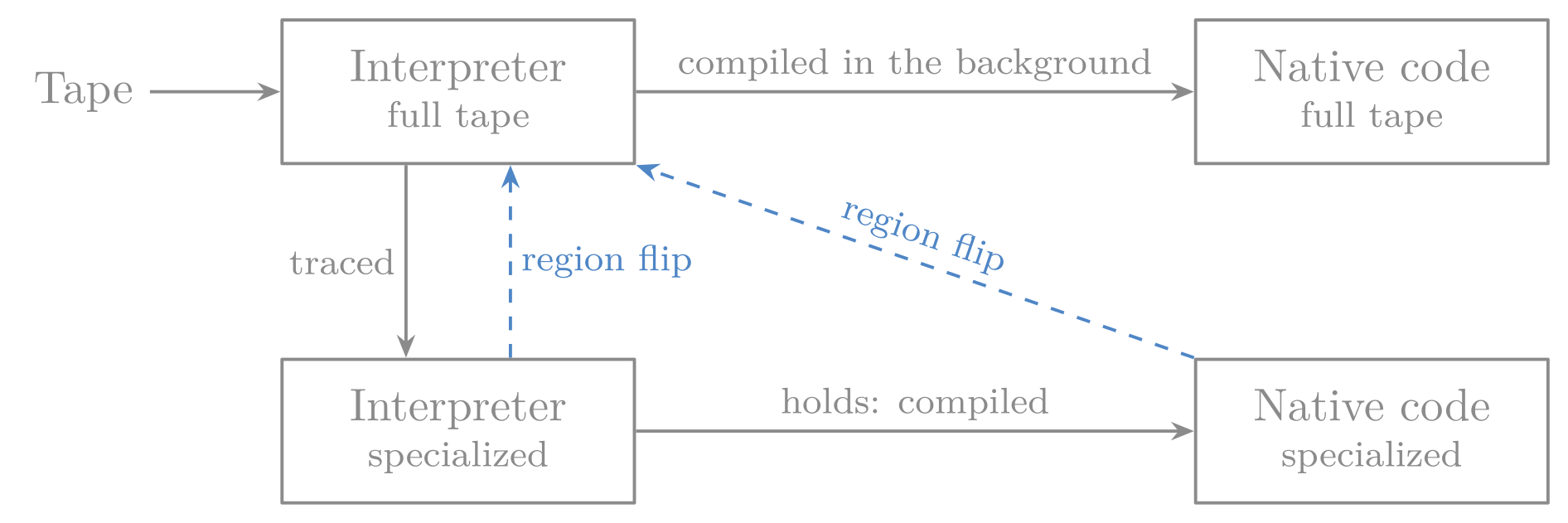
The native backend writes the tape as AArch64 or x86-64 machine code. The interpreter serves from the first call, a specialized tape once a region is stable, native code once the background compile is done, all on the same IEEE operation sequence, so no switch changes a bit. Independent calls run as parallel stages, with the same results for any number of threads.
The solver in the graph
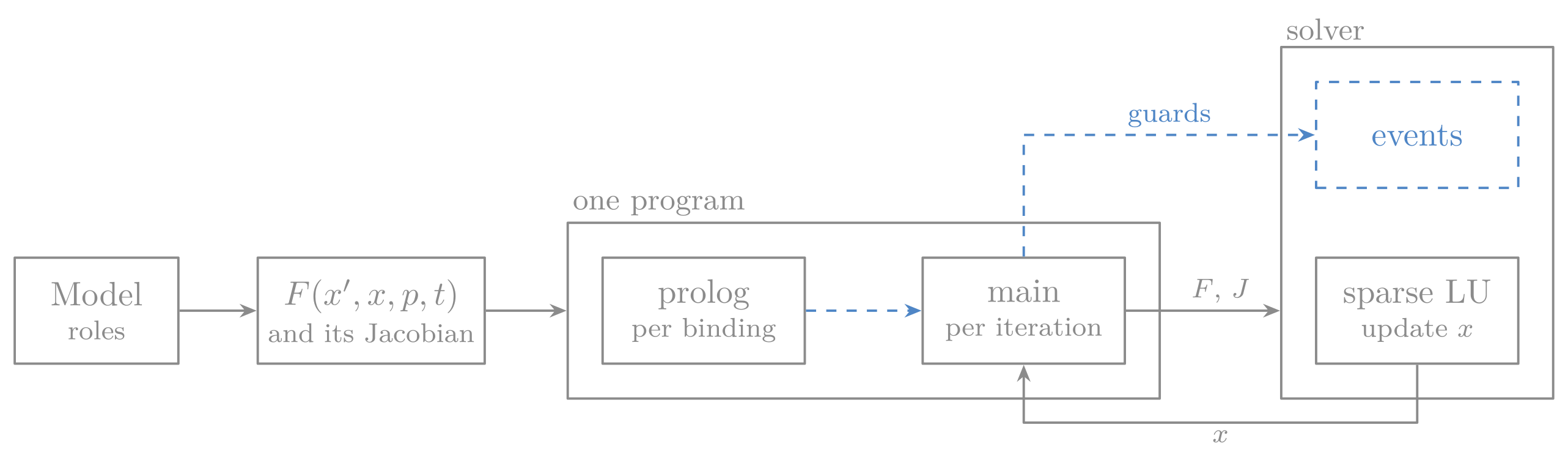
Roles say what each input is, state, derivative, parameter, time, delay or guard, and a signature orders them into the programs a solver drives: the residuals and their sparse Jacobian in one program, the guards reporting the events. The solver keeps the loop and the step control, factors the Jacobian with a sparse LU library such as RSLAB , and evaluates into its own buffers.
History
Building FastSim earlier this year led me down a rabbit hole of computational graphs. An ODE or DAE at the op level gives a solver a lot: analytical Jacobians, the sparsity pattern, stiffness and nonlinearity detection. It also puts the op count next to the modeling question, since in the end it is all memory and ops. So why stop at the model? Lower the solver into the graph too, and evaluating the graph gives the solution.
In September 2026 I took the expression graph backends of FastSim and SANE out into a library of their own.